|
January carries a particular kind of energy.
There is often an unspoken sense that we should be clearer, better, more disciplined than we were just weeks ago. New habits. New intentions. A new version of ourselves. Even within spiritual spaces, this time of year can quietly invite us to perform our healing, to perfect our practices, to prove that we are growing. I notice this not only around me, but within me. Even after years on a spiritual path, there are moments when I catch myself subtly assessing my own rhythm. Am I doing enough? Am I staying disciplined enough? Am I embodying what I teach in the way I think I should? For many sensitive, open-hearted people, this energy does not feel inspiring. It feels heavy. For a lot of us, perfection was never really about getting things right. It was about staying safe. Somewhere along the way, often very early, we learned that being good, capable, helpful, or spiritually aware helped us belong or avoid harm. Performance became a way to navigate the world. Perfection became a way to protect ourselves. I can see how this pattern has shown up in my own life, even in my devotion to spiritual practice and service. What began as a sincere love for the sacred has, at times, carried an edge of pressure. A quiet belief that I should be further along by now. That I should have figured something out already. These patterns can easily make their way into our spiritual lives. We try to meditate the right way. We want to heal completely. We measure our growth and judge ourselves when we feel like we have slipped backward. And while all of this is happening, the body tightens. The breath becomes shallow. Something essential begins to tire. Living this way has a cost. I feel it when I am holding myself to an internal standard instead of listening. There is a particular kind of fatigue that comes from always being on, even when the performance is subtle and internal. It pulls us out of the present moment and into constant evaluation. Am I aligned? Am I healed? Am I doing enough? Presence does not thrive there. Presence does not come from effort or pressure. It cannot be perfected. It arrives when the striving softens. One of the reminders I return to again and again is that presence is not something to achieve. It is a return. A return to the body. A return to the breath. A return to what is actually here, rather than what I think should be here. I notice this most clearly in the quiet moments, when I stop trying to guide myself somewhere better and simply allow myself to arrive where I already am. Often what I find there is not peace or clarity, but honesty. And that honesty feels alive. It feels real. Presence does not require improvement. It asks only for willingness. A willingness to meet ourselves without performance or judgment. Nothing needs to be fixed before it is allowed to exist. I have been wondering what it would be like if January did not need to be a proving ground. What if it could be a threshold instead. A gentle turning rather than a hard reset. Instead of asking who I need to become this year, I have been practicing asking where I am being invited to come back to myself. Instead of perfecting the practice, I notice what happens when I listen for what my body actually needs. Instead of performing spirituality, I let it become quieter, simpler, and more lived in. Presence has a way of revealing what is true without urgency. It shows us what matters without force. It unfolds in its own timing. As you move through this month, I invite you to notice, gently and without judgment, where you may be striving for perfection when presence would be enough. Where you may be performing, spiritually or emotionally, out of habit rather than truth. And what shifts when you allow yourself to arrive in this moment just as you are. There is nothing you need to prove in January. There is nothing you need to catch up to. This month does not ask for reinvention. It asks for remembrance. You are already here. And presence, quiet, honest, and compassionate, is more than enough to begin again. I love You. Dr. Angela Faith
0 Comments
December arrives with its soft glow, the twinkle lights, the cozy evenings, and the quiet whisper that we’re supposed to somehow feel merry on command. There’s a subtle pressure — or sometimes a very loud one — to be cheerful, available, generous, and endlessly accommodating. Yet this season often stirs something much deeper: old wounds that resurface, heightened emotions, complicated family dynamics, spiritual disconnection, financial pressure, and the simple truth that our nervous systems are tired by the time the holidays arrive. In my work with clients and students, I see this theme every year: December amplifies unreasonable expectations. We expect ourselves to do it all with grace. We expect others to suddenly be on their best behavior. We expect old conflicts to magically dissolve because the calendar says it’s a season of joy. And perhaps the most gentle truth of all is that winter doesn’t support any of that. Not energetically. Not spiritually. Not emotionally. In the natural world, December is a time of descent — of quiet, of darkness, of stillness. It is when the Earth rests, when the animals burrow, when everything moves inward. But humans have created a holiday season that demands the opposite. More gatherings, more spending, more stimulation, more everything. No wonder so many people feel frayed by mid-December. We’re simply moving out of rhythm with the wisdom of winter. This is a season that actually invites rest, intuition, and reflection. A season to slow down. A season to listen to your inner world. When your energy feels stretched thin, it isn’t a failure — it’s your body reminding you of the truth of winter. And it isn’t just the expectations we put on ourselves that create strain — it’s the ones we place on others. Every year, someone hopes that a family member will be softer, kinder, less reactive, more healed, or magically transformed by the holiday spirit. But expecting a person to become someone different for the sake of a date on the calendar is a setup for disappointment. As the old saying goes, a snake doesn’t stop being a snake just because it’s Christmas. People don’t shed their patterns because a tree is lit. They don’t evolve instantly because it’s December. Their behavior belongs to their journey, not to your seasonal hope. When we release people from our expectations — when we let them be who they are without trying to manage or anticipate their behavior — we reclaim our peace. There is such freedom in saying, “I allow you to be who you are, and I allow myself to be at peace even if you never change.” This is not cynicism. This is spiritual sovereignty. When you take the pressure off yourself to perform a perfect holiday, and you take the pressure off others to become the version of themselves you wish they were, the entire season shifts. Your system settles. Your breath deepens. You become more present, more grounded, and more able to experience the moments that matter. Simple practices can help you stay aligned with the season rather than the cultural frenzy. Light a candle and honor your ancestors. Step outside for a few breaths of cold air. Hold a stone or pine cone in your hand and let nature steady you. Make space for one “soul celebration day” where you honor winter in your own way — with silence, journaling, cooking, a warm bath, a walk, or a moment of reflection. And remember, your December does not have to be Christian or commercial to be meaningful. Many people celebrate the turning of the year through Winter Solstice rituals, moon cycles, candlelight traditions from many cultures, ancestral gratitude, or simply honoring nature. Meaning doesn’t come from the calendar — it comes from intention. If this season feels heavy or complicated, trust that nothing is wrong with you. You are not failing the holidays; the holidays are simply out of sync with the natural rhythm of winter. This is a time for gentleness, for truth, for rest, for releasing what doesn’t belong to you — including the expectations of others. And perhaps this December can be a softer one. A quieter one. A more honest one. A season not of pressure, but of presence. Not of performance, but of peace. Not of unreasonable expectations, but of a return to yourself. Much Love, Dr. Angela Faith When I was a little girl, my mother used to stand outside my bedroom door and listen to me talking to my “friends.” She never seemed alarmed—just quietly curious. I would come to learn later in life that my mother was a mystic too, one who spoke with spirits and listened to the unseen. But at that time, I don’t know if she had yet remembered that part of herself. Still, there were clues. Our bookshelves held titles on witchcraft and the old ways, things most people didn’t talk about in the 1970s. When a neighborhood visitor caught sight of them, whispers began—rumors and labels that only deepened my sense of being different. What I didn’t realize then was how deeply those perceptions would shape my understanding of belonging, and of what it meant to walk between worlds. My mother also spent a lot of time with her grandmother, my great-grandmother, whom she described as a “medicine woman.” I’m grateful for the memories I have of her—the quiet wisdom in her eyes and the calm presence she carried. Though I didn’t understand it then, those early moments with her planted seeds that would later grow into my own path of remembering and healing. I was an only child, but I was never lonely. My room was alive with music, light, and conversation no one else could hear. I had a record player that filled the space with sound, spinning the same albums over and over as I sang and played. I would sit cross-legged on the floor, lost in those worlds of melody and imagination, surrounded by the gentle hum of energy I knew as companionship. That space was my first sacred sanctuary. When we moved, and I was around school age, my playroom was in the basement. It became my secret world of safety and wonder. I decorated it with my toy box, my books, and my beloved family of stuffed animals. A giant circle-weave rug warmed the floor, and one side of the room had a couch and coffee table—perfect for playing grown-up. The other half was bare concrete, my little roller rink where I could skate in circles for hours. In the winter, the wood-burning stove glowed nearby, filling the room with that unmistakable scent of comfort and home. Yet, I also sensed energies in that home that frightened me. I would wake in the night and see someone standing in my room, watching silently. My parents assured me it was just a dream, but I knew what I felt was real. Sometimes, late at night, I’d hear voices and laughter rising from the basement—a festive gathering of people when everyone in the house was asleep. Those moments left me both curious and uneasy, aware of a world beyond the one my parents could see. After my parents divorced when I was eight, that sensitivity only intensified. Without understanding my own energetic vulnerability, I absorbed every emotion around me—my father’s grief, my mother’s absence, the unspoken tension that hung in the air. I didn’t yet know how to shield myself, how to separate what was mine from what was not. Those years were filled with both wonder and confusion. School was bright and loud and crowded. I loved learning, but I didn’t understand how to be around so many others. The emotions of the children swirled like colors I couldn’t filter out—anxieties, insecurities, sadness, excitement—I felt them all as if they were my own. The word empath wasn’t used in the 1970s, or at least not in my world. There was no language for what I experienced, no internet to offer explanations. I just knew I was different. In my effort to be “normal,” I began to dim parts of myself. I tried to laugh when others laughed, hide my tears when I felt too much, and say the right things to be liked and accepted. But no matter how hard I tried, I never quite fit. The teachers loved me—gentle, respectful, quiet—but with the other students, I always felt like I was standing just outside a window, watching life happen on the other side. As I grew older, that sensitivity became both a gift and a challenge. I could sense the unspoken emotions in every room, often trying to ease others’ discomfort without realizing I was depleting my own energy. I didn’t yet understand that empathy without boundaries can become self-abandonment. In the absence of language or guidance, I sought ways to numb the noise—to quiet the ache of feeling so much. My parents’ divorce brought two very different worlds, one stable and one chaotic, and my young heart tried to navigate both. Those early years taught me that sensitivity without safety can turn inward, but they also planted the seeds of the healer I would one day become. It took me many years—and many awakenings—to reclaim those hidden parts of myself. To understand that sensitivity isn’t a weakness or an illness; it’s an invitation to awareness. Sensitive souls are not only attuned to the emotions and energies of this world, but also to the subtler dimensions—the unseen realms where Spirit moves, where ancestors whisper, and where intuition takes form. We feel the spaces between words, the energy beneath interactions, and the presence of what others may not yet perceive. Now, I teach what I had to learn the long way: that being sensitive means carrying a deeper responsibility for our energy, our words, and our presence. It means learning the sacred art of boundaries—not as rigid walls that keep others out, but as sacred containers that hold and protect what is most essential within us. Boundaries allow energy to flow without depletion. They create a space where compassion can breathe, intuition can flourish, and our spirit can remain centered even in a noisy world. For the sensitive soul, boundaries aren’t barriers—they are medicine. For the sensitive soul, the veil between worlds is thin. We are the bridges between the seen and unseen, called to bring understanding, compassion, and light into both. If you’ve ever been told you’re “too sensitive,” “too emotional,” or “too much,” know that you’re not broken. You’re simply attuned to the subtle, where the rest of the world is still learning to listen. For the Sensitive Soul If you resonate with my story, you may already know the beauty and challenge of feeling deeply. Here are a few gentle practices that have supported me along the way:
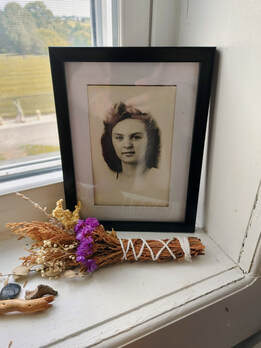
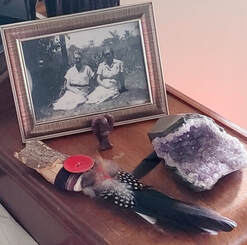
Closing Reflection: What would change if you saw your sensitivity as a superpower instead of a flaw? Take a few quiet moments this week to sit with that question, hand on heart, and simply listen. You are safe. You are supported. You are love. I love you. Dr. Angela Faith When I was about six years old, my parents enrolled me in swimming lessons. From what I understand, it was mostly my mother’s idea. She had a deep fear of water, and she didn’t want me to inherit that fear or carry it as a limitation in my life. At the time, of course, I didn’t fully understand all of that — I just knew that swimming lessons were something I was going to, and I loved the water! The pool was loud with children’s voices and splashing water. Our young instructor — looking back, I realize she was probably just a teenager herself — was taking each of us across the pool one at a time using a kickboard. The rest of us were lined up along the wall, holding on, laughing, and chattering the way kids do. But I was never the loudest one in the group. Even then, I tended to hang back, more of an observer than a joiner. I remember watching everyone else — the giggles, the water flying everywhere, the energy of it all. And then, for reasons I still can’t explain, I pushed away from the wall. I wasn’t ready. The moment I let go, I sank straight down. I remember coming up, trying to scream for help, but every time I opened my mouth I swallowed water instead. My small arms flailed, my chest burned, my throat felt raw. The panic was sharp at first, but then it dulled into something heavier, almost dreamlike. And then I let go. The struggle stopped, and with it, the fear dissolved. I sank slowly, almost weightless, to the bottom of the pool. I remember how silent everything became. The chaos of splashing and shouting above was muted, replaced by a stillness so complete it felt sacred. The water wrapped around me like a soft blanket. Looking up, I saw the sunlight bending through the water, golden streams rippling and dancing as if they were alive. The world glowed in slow motion. It was breathtakingly beautiful, otherworldly — and in that moment, I felt utterly at peace. Time disappeared. I wasn’t afraid anymore. I was just… suspended in light and water, embraced by something far greater than myself. And I don't really have the words, other than to say, I was not alone. I felt so surrounded by love, and beings of love. And then, just as suddenly, I was pulled back. The instructor had noticed me, swam across the pool, and dragged me to the surface. She resuscitated me there on the side of the pool while the other children looked on, wide-eyed and silent. The next class I attended, our lesson was something I’ll never forget: how to float on our backs. The instructor told us, “If you ever get into trouble in the water, lean back, kick your feet up, lay your head back, and float. The water will hold you.” That simple lesson has stayed with me my whole life. When I’m in trouble — when I feel overwhelmed, when I’ve lost my footing, when life feels like too much — I remember to lean back. To float. To stop thrashing and struggling. To trust that something greater will hold me, just as the water did. In shamanic traditions, experiences like this are often seen as thresholds — moments when the soul brushes against the otherworld. Near-death experiences are initiatory by nature. They remind us that death is not only an ending but also a doorway. My six-year-old self didn’t have words for that at the time, but the memory imprinted something deep within me: that surrender can open us to peace, that beauty can be found even in moments of transition, and that life itself is a rhythm of letting go and being carried. And then came graduation day. Parents filled the pool deck to watch us demonstrate what we had learned. At the far end of the pool stood the high dive — a ten-foot platform we had never been asked to jump from before. One by one, the children lined up. Naturally, I let everyone go ahead of me. Then I heard the instructor’s voice: “Angela, I want you to go first.” My heart pounded. The ladder felt impossibly tall beneath my small hands and feet. The water below looked so shallow from up high, like the bottom of the pool was just inches under the surface. I could have cried. I could have refused. But I didn’t. I pinched my little nose, took a breath, and stepped off into the unknown. I never jumped from that high dive again — but that one leap became something I would draw on many times in my life. Days before, I had surrendered. That day, I jumped into the unknown, trusting, feeling, knowing I was supported. Both became teachers. It wasn’t just a swimming lesson. It was a life lesson. And, perhaps, an initiation into the path I walk to this day. Honoring the Ancestors is a primary principle of Shamanism. When we honor our Ancestors, they help us. If we blame them, they haunt us. What do you think of when you think of your ancestors? Maybe you think of your grandparents and beyond. Often when I mention ancestors, people will explain to me that they didn’t know their grandparents. My response: “Oh, but they know you.” Consider that your ancestors are all that have walked before you. You could even include the trees and plants, the birds and animals, even dinosaurs, as your ancestors. Your Higher Self is an Ancestor, having lived many lives before this current one. As a Shamanic Practitioner, I can support individuals in ancestral healing, but practicing honoring the Ancestors is part of the individual work that heals generations forwards and backwards. No one else can do that part for you. Saying you honor the Ancestors is a start, but words can fall short without a practice of action. This is not a time to seek perfection. It is creating and implementing a practice that energetically supports you and the collective. I will help you get started. 3 Ways to Honor the Ancestors 1. Create an Ancestral Altar Choose a place in your home - on a shelf, a wall, a table - to display pictures or items of your familial ancestors, even if you didn’t personally know them. If you don’t have access to actual photographs, with a little research you may be able to find some pictures on the internet. If you know your great-great grandmother was a nurse, you could include an item to represent the nursing field in place of a photograph. Adding a battery-operated candle with a timer to be lit during the day is a nice touch to remind you to give thanks to those that contributed to your existence, simply be their own existence. 2. Practice Forgiveness Forgiveness is releasing another from the expectations placed on them. Not forgiving is like drinking poison, hoping another will get sick. It creates illness and dis-ease in the physical and emotional, and it can leave one feeling blocked spiritually. This is especially true for justified resentments. Practicing forgiveness is just that, a practice. It is not a one-time event. Maybe you have a family history of addiction or abuse, abandonment. Staying angry only keeps the cycle alive and strong, like gasoline to a fire. It can affect every aspect of your life. Actively practicing forgiveness is something covered in my mentoring programs, where I share a process to deal with resentments cyclically, rather than waiting until they have accumulated so much energy they are running your life. 3. Give Offerings Many indiginous cultures had practices of giving offerings to the Ancestors. There is a Hindu custom of feeding the crows as an act of sharing with the Ancestors. On an altar you could create a mandala or a crystal grid, or keep fresh flowers. Outside, bird feeders, birdbaths, planting flowers or a tree can all be intended as offerings for the Ancestors. Get creative. It really is all about intention. Start with these three simple approaches, and observe what shifts you experience. You may feel more supported, guided, empowered. You may find that you intuitively know the answer to something, as if someone else suggested it to you. If this approach resonates with you and you would like to learn more, let’s get you enrolled in my signature program, A Shamanic Approach to Modern Living! Click here to schedule a Complimentary Clarity Call, your chance to ask questions and be certain I am the one to guide you. I look forward to connecting with you! You are Safe. You are Supported. You are so Loved. I love you! Dr. Angela Faith One thing I have observed as a Sensitive Soul and working with other Sensitive Souls is that we tend to get to points in our lives where staying in what is familiar has become too uncomfortable. There becomes a deep feeling that something must change. Resisting this feeling creates inner conflict. I would often wonder what was wrong with me, and why I couldn't stay in one place or in relationships and just “be happy”.
The answer is yes, we all have allies in the non-physical, in the spirit realm, in the Otherworlds, in the Unseen. This is true whether or not I believe or understand it, just as gravity is true whether or not I believe or understand it. I’ve found it is best to accept that there are many things that I as human do not have the capacity to understand. I trust what resonates with my soul - the feeling part, rather than the thinking part. That innate knowing. This applies to all things, including my concept of God, Creator, Great Mystery. It takes practice, but it is possible to gain a deeper concept and remembering of who I am and what this Big Beautiful Life is about! I also have come to understand that I am not alone, nor have I ever been, even in my loneliest and darkest times. Often others share with me their recollection of a childhood encounter with something not human, whether they felt something, saw an apparition in their room, or had a visit in a dream that seemed real. Many times they were told by their adults it wasn’t real, because their adults were maybe told the same thing as a child. Sometimes the stories are shared as pleasant encounters with angels or visits from a beloved, and other times it is a fearful encounter that nightmares are made of. We are many generations removed from teachings on how to connect with our Spirit Allies, and how to ground, shield and protect from that which we do not see. We are actually discouraged from believing, or maybe punished for entertaining such ideas. We may also have forgotten that we have access to Compassionate Helping Spirits that will guide us and support us through this Living Journey, always! We have our Ancestors, Angels, Spirit Guides and Power Animals, oh my, to offer comfort and guidance. My awareness of my Spirit Allies may get disconnected, but the connection cannot be broken. This loving guidance is not conditional. It is always there. It does, however, take deliberate intention and a surrender of resistance to have the awareness of this support and guidance. Here is an exercise to allow you to experience, even just for a moment, your connection to Spirit Allies. It is easy and simple, as this is not something new for you to learn. It is something for you to remember. It does not matter what your beliefs are. If you are in a seated position, place both feet on the floor, relaxed. If you're lying down, uncross your limbs. Allow your arms to relax, either by your side or palms up on your thighs. Allow your eyelids to relax, beginning with small slits that eventually relax to closed. Take a deep breath in through your nose, and exhale out through the mouth. Do this 3 times, and then allow your breath to find its natural rhythm. Imagine your body filling with white light until you feel yourself glowing like a light bulb. You may even feel yourself vibrating. You have raised your vibration. Now repeat out loud 3 times, “Angels and Guides draw near.” Be aware of the sensations in your body, the feeling of your surroundings, any images or symbols that may appear in your mind’s eye, or maybe a scent or sound. Sit in this for a moment. Now repeat 3 times, “Thank you.” Take a deep breath, and when you’re ready open your eyes. It is great to journal about your experience, and practice this as often as you like. You will get better at remembering and experiencing what it feels like to be aware of your connection to a loving and compassionate energy. I would love to hear about your experience! If you are interested in delving more into unlocking your memories and learning to live an authentic Spirit-Led Life with purpose and Divine Guidance, schedule a free call with me. I would be delighted to discuss ways to support you in this exploration. Remember, you are safe. You are Supported. You are so Loved. I love you! Angela Faith The spiritual practice of Shamanism is an ancient and beautiful practice that will enhance any life, regardless of the outer circumstances. Shamanism is practiced worldwide, and has withstood the test of time, being the oldest spiritual practice known to humankind. There are basic Shamanic principles that apply across the globe, and understanding how to apply them in a modern-day life can empower one to create positive change. We are all intricate parts of a whole, the Web of Life. By improving my own life experience, I improve the experience of All of Life. I am being the change! Think of the inside of a watch. There are gears and springs of different sizes and shapes, but all are required for the watch to function as designed. You, too, are essential to the whole. When you are in alignment with your natural design, happy and joyful, it affects all of creation. Often one can feel blocked, disconnected, or wanting to create change and not know how to do so. This makes creating positive impacts seem daunting and impossible. I am happy to share with you that it can be quite simple! Understanding these 3 principles and implementing these simple practices in your day can spark your innate spiritual guidance and direction, allowing you to feel empowered and supported in creating a life filled with joy, thereby projecting joy into the whole Web of Life! 1. Maintaining your Personal Power Once I have done the work to restore my Personal Power, it becomes my responsibility to maintain this power. This means making my Self and Self care a priority. One place to start is a morning ritual immediately upon awakening, before the feet hit the floor. Our sleep time is our restoration time. It is a time that the body and mind are reset and restored. It is as important as food and water. However, if upon awakening I pick up yesterday's stories with the same thoughts and to-do lists, or I immediately pick up the phone and check notifications, it can feel as if the sleep time was not effective. This sets the tone for the whole day, and affects how I show up for the day. By deliberately and intentionally calling on my Personal Power upon awakening, I am taking a moment to bring awareness to the new day and the new possibilities it holds. I am separating the segments of the previous day, sleep time, and this new beginning. By using your focus in this way, you are interrupting the loop of thought patterns that you may be accustomed to waking up to, changing the whole tone of your day. Most importantly, you are supporting your connection with Universal Intelligence that supports all things, guiding you and supporting you in all your affairs. 2. Connecting with Nature There is a difference between being in nature and being WITH nature. If I pay attention, Mother Nature is always offering me teachings and guidance on any issues I may be facing. Make a commitment to going outdoors at least once a day, even if it’s only on the porch, or taking a moment before getting in your automobile. Take 3 deep breaths, being mindful of the exchange between you and any trees nearby. Notice any Winged Ones that visit, and focus on their characteristics. Take a moment to be aware of what you hear, what you smell, what you feel, and what you see. This doesn't have to be a long visit, but I invite you to take as much time as you can! Walk around the perimeter of your home, and notice things you’ve never noticed before, or notice how they change with each passing day. Do this multiple times a day to restore creativity, energy, and connection, as well as support healing in your physical well-being. For maximum results, remove your shoes, or place the palms of your hands on the earth. 3. End the Day with Thanks Turning off all devices and writing down events of the day that you are thankful for is a nice way to set the tone for a restful and restorative night’s sleep. It again shifts the focus from the day’s worries or challenges, and restores an awareness of the magic that is all around you, and that you are a part of, not apart from! Just being aware of the beauty in your life will amplify more beautiful things around you and within you! Even if you don’t go to sleep immediately after, this is a powerful practice to create momentum of gratitude. Everything changes with gratitude. Applying these simple practices allows you to experience the principle of all things being connected, rather than it just being a concept that you’ve heard or read. When you begin feeling a part of all that is, loving yourself becomes as easy as loving the smell of rain. If you would like to learn more about Shamanism and how it can empower you in creating the life experience you desire, set up a free call with me. I would be delighted to share with you how you can develop a relationship with your Self and Compassionate Spirits, offering you guidance and support in your life journey. And remember, you are safe. You are Supported. You are so Loved. I love you. Angela Faith I can use my focus for positive or negative emotions, and whichever I choose is what I will attract back to myself.

This doesn’t imply that I never have negative emotions. I’m here to experience contrast! Not having contrast would be like standing in the same spot all of my life, never moving. There’s no adventure in that! I do, however, practice an awareness of my emotions, my emissions, and if they are negative, fearful, I begin shifting my focus to something positive, love. This is a process, but with practice it becomes very natural. Being deliberate and intentional with my focus has shifted what I attract in my life, rather than just letting my emotions run on auto-pilot, leaving me feeling powerless over my life experience. Shifting my focus means turning off the unpleasant TV program and reading an enlightening book, or putting on music videos and dancing around the living room. It can be coloring, creating, journaling, cooking, cleaning...you get the point. The ego will say, ”Why are you coloring, the sky is falling?!” And I know that while I’m coloring, I will allow myself to receive direction on how to handle the situation at hand. Change is constant and necessary. Everything in nature is cyclical, including us. Resistance to change, to cycles, is where the struggle is created, rather than in the actual change itself. Learning to recognize and remove your resistance is where your power lies, rather than trying to stop change from happening. Using your Super Power, your focus, deliberately and intentionally you can flow with changes, rather than drown in a sea of fear and uncertainty. Removing resistance is a process to be practiced and repeated when necessary. It’s not a magic fix. I begin by recognizing when resistance to change is present. It manifests as fear, feelings of hopelessness, physical symptoms like upset stomach, anxiety, stress, worry. I acknowledge, “Hey, I’m resisting this change that’s occurring that I’m attributing to this specific event.” That’s it. No judgement of myself. No criticism of myself. Just an awareness and an acknowledgement. I then deliberately and intentionally put my focus on something that I can control. My breath is the first thing. Three deep breaths, in through the nose, out through the mouth. This simple practice gets me grounded and aligned, so now I am in a state to receive direction in this moment of change, rather than feeling powerless. Inspired thought, Direct Divination, Universal Intelligence, God/Goddess, whatever you want to call it...consider it is always accessible to you, but hard to access in a state of resistance or fear. What does it sound like? It is either a thought or direction for the next step, a knowing, or it is comfort and calming, feeling supported as you move through the moment that may be uncomfortable, for it’s no secret, change can certainly get uncomfortable. It is natural for many to hold our breath when we are resisting change. This tells the brain that it is suffocating, and the body goes into panic mode. This can also contribute to anxiety attacks. So I may believe I’m having an anxiety attack because I just got rear-ended and my whole day has changed, but if I take 3 deep breaths I am able to flow with this event without also feeling like I’m suffocating, which exacerbates the whole thing. Yes, I understand it’s hard to take 3 deep breaths when I’m having an anxiety attack. However, I understand that if I practice the 3 deep breaths daily, I will be better at implementing it in more intense situations. When major change is occurring in my life, I’ve learned to lean into and explore, rather than resist and avoid. This is where my power lies. Again, it may be uncomfortable for a period of time, but this, too, shall pass. In this Big Beautiful Life that can get messy at times, remember this: You are safe. You are supported. You are so loved. I love you. Angela Faith |
Categories
All
|


RSS Feed